
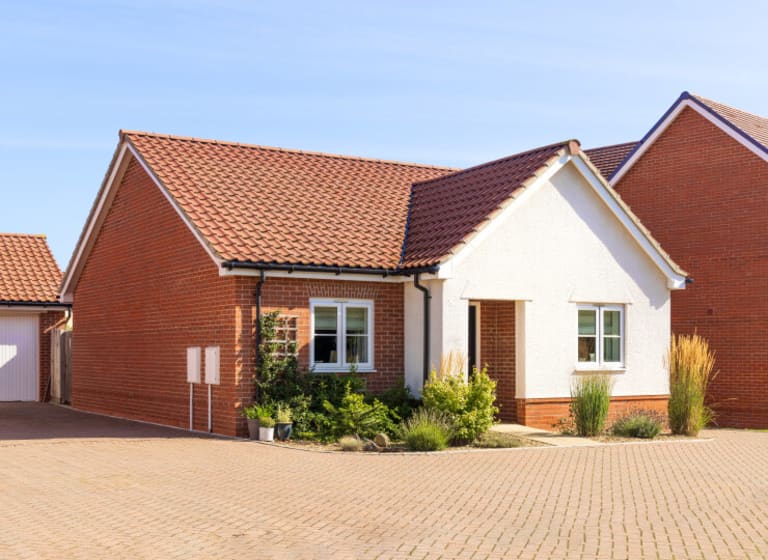
A growing number of older homeowners say they’re trapped in properties that no longer meet their needs, as new research commissioned by Uplifts reveals the UK is now facing a ‘critical accessibility gap’ in its housing market.
According to the study, one in four (25 per cent) people aged 55+ say their current home won’t support their long‑term mobility - yet bungalows, the home type most associated with step‑free living, now make up just one per cent of all new‑builds.
With supply this low, an estimated 1.2 million older movers are being shut out of the homes that would allow them to live safely and independently for longer. Many are left staying put in larger family houses they no longer need - properties that younger families are desperate to buy.
The squeeze on bungalow supply has pushed many older homeowners to look at alternatives, with 22 per cent now considering moving into a two‑storey home instead - something that would once have been unthinkable for people planning for later life.
For those open to the idea, key draw factors include more choice (24 per cent), lower prices than bungalows (20 per cent) and the privacy of upstairs bedrooms (22 per cent). But they’re clear that certain features are essential for this option to work, including:
Ground‑floor bathrooms (32 per cent)
Safer, well‑lit stairs (17 per cent)
Space for future adaptations, such as homelifts, if their mobility changes (12 per cent)
Property expert Rachel Ollington warns that the UK has backed itself into a corner.
“Demand for accessible homes is rising fast, yet we’re building almost no new bungalows. It’s created a perfect storm. Two‑storey homes that are designed with adaptability in mind (space for future lift installation, safer stairs, flexible layouts) give older buyers far more choice. And when those buyers finally get to move, it frees up much‑needed family homes for the next generation.”
Estate agents say the competition for the few bungalows available is fierce, with prices rising and buyers regularly facing bidding wars.
Chris Webb, owner of The Estate Agent Consultancy, said: “Downsizers are desperate for step‑free homes, but the stock just isn’t there. Increasingly, people are turning to houses they can adapt - whether that’s safer stairways, ground‑floor facilities or room to add a homelift later. These homes give people options, and options mean chains start moving again.”
Occupational therapists stress that safe, independent living can be created in many types of home, as long as they are designed or adapted with future mobility in mind.
Kate Sheehan, occupational therapist, said: “Accessibility isn’t about a certain home type. It’s about good design. Level entrances, safer stairs, bathroom layouts that can evolve, and spaces that could house a lift in future can make a two‑storey home just as practical and safe as a bungalow. The more adaptable our housing stock is, the more independence people can maintain as they age.”
Almost half (47 per cent) of adults with ageing parents believe single‑storey homes should be prioritised for older buyers. A further 26 per cent support age‑inclusive developments, and 26 per cent say two‑storey homes designed with accessibility options (including homelifts) should be part of the future housing mix.
Most believe the responsibility to fix the shortage lies with local councils (27 per cent), housing associations (21 per cent) and private developers (18 per cent).
With the UK’s population ageing rapidly, experts warn the accessibility gap will only widen unless homes (whether single or multi‑storey) are built or adapted to keep people safe, independent and mobile for as long as possible.